Rereading Steal Like an Artist
I first read Steal Like an Artist about ten years ago, when I started reading books. It was basically the second book I ever read. I was 20. I’d been a photographer for about a year, and if I remember correctly I was just starting to learn graphic design.
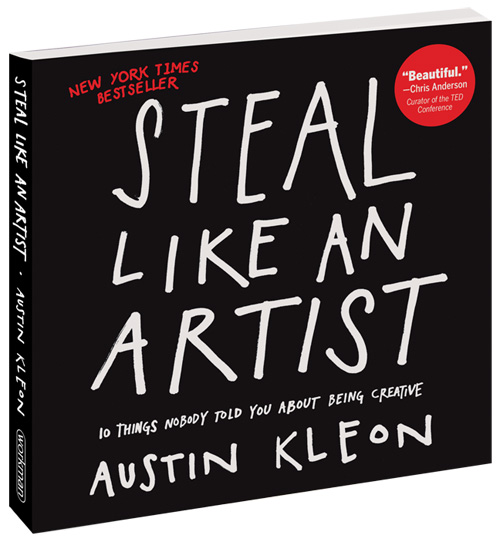
I don’t remember a lot from that first time. Just that I really liked it and enjoyed it. That’s why I decided to read it again. Other than that, I don’t quite remember anything.
I’m 30 now. I’m more experienced. Things have changed with AI. I’ve changed. So I read it again. The highlights below are from the second time.
It’s a great book for all creative people. I’m trying to find ways to be creative and how to think like a creative. I would definitely suggest this book to everyone.
Nothing original
Seeing similar stuff to what I design that already exists made me feel better.
The old feeling was: “Damn, what I am doing already exists. I must create something else.”
Now I’m trying not to be disappointed. I keep the things I like for inspiration and ditch the rest.
Inspiration is everything. Digital and physical. I try to get inspiration from unrelated fields so I don’t stumble into similar work: car design, interior design, architecture. I also try to get inspired by the physical world. One personal project was a travel planner inspired by the old way of keeping notes in a folder. The biggest steal was flipping through pages.
The hard part is finding the right reference and incorporating it so it makes sense.
Combination of what we let in
This made me more conscious and intentional about what I choose to consume. Less doom scrolling. More research on good timeless design: classic products, mid-century modern, Bauhaus.
It hasn’t really affected my day-to-day digital product design work yet. But it started affecting how I see design in general. Less excitement for new trends. More intention on what I keep and what I remove.
Outside work, same thing with media and the things I buy. I pay more attention to the design and aesthetic of what I bring home.
Study heroes, not the whole field
This one stuck with me.
My heroes: Dieter Rams, Jony Ive, Tony Fadell. I want to study their process and the thinking behind their designs.
I haven’t managed to apply this yet. I haven’t started the deep study yet.
Copy vs inspiration
The idea that stuck: copy is when you’re stealing from one. Stealing from many is inspiration.
I feel better borrowing individual elements. That’s what I do when I’m looking for inspiration for a new design. I usually create moodboards.
Make what you wish existed
I’m looking for things I can’t find: tools (physical and digital), home decoration, utilities.
I’ve built micro tools for daily work. I’m working on a bigger idea to help people detach from phones. The motivation is both for myself and for others. Mostly myself.
Work physically first
I want a full analog desk setup, but I don’t have enough room in the office.
The book reinforced working physically first. That was an idea I’d already been exploring. Physically first for me means sketching mostly, or writing ideas down.
It depends on time. Tight client deadlines, I skip it. Personal projects, or when I have more exploration time, I start on paper first.
Boredom
I’m both bad at boredom and I know ideas can show up there.
Like everyone, when I’m bored I instantly pull out my phone. I’m trying to reduce that habit. The book is a good reminder.
When I don’t grab the phone, I sketch, I read, or I do nothing and let my mind wander. Mostly that: doing nothing and letting my mind wander.